The Wolf and the Calf
May 9, 2008







Critics show their limitations and ignorance when they read this pithy and witty film as a critique of Soviet realities. This film criticises civilisation, globalism, racism, and imperialism, of which so many nations are guilty.
May 6, 2008
Table of contents:
for kids from 0 – infinity
.The Little Steam Engine from Daisyland – Thomas the Little Tank Engine’s Soviet antipod. Translated into English by me.
.The Moth Translated into English by me.
.The Island (subtitles not needed)
.Crane Feathers – based on a Japanese folk tale (subtitles not needed)
.The Wolf and the Calf. English subtitles
.Moomintrolls (Soviet, 1978)
Puppet animation (the three parts form a feature film):
1. Moomintrolls and all the others (based on Comet in Moominvalley)
2. Moomintroll and the Comet
3. The Road Home1. All because of the Hat: Spring (1980)
2. Summer in Moominvalley (1981)
4. Autumn comes to Moominvalley (1983)
.Cats’ Promenade (subtitles not needed)
.There Once was a Dog – based on a Ukrainian folk tale with English subtitles
.The Tree and the Cat. English subtitles
.A Crow always in Love,1988.
.Winnie the Pooh (Soviet-Russian), part 2
.Ballerina on a Boat (subtitles not needed)
.Heron and Crane by Yuri Norstein 1977. English subtitles.
.Ball of Wool by Nikolai Serebriakov, 1968. English subtitles.
.About Sidorov Vova, 1985. English subtitles.
.Fox and Hare by Yuri Norstein
.Hedgehog in the Fog (based on a Russianfolk tale) By Y. Norstein. English subtitles.
for kids who can handle serious stuff
.The Dream of a Ridiculous Man based on the story by F. Dostoevsky
.Poor Liza – based on a novella by Nikolay Karamzin (subtitles not needed)
.Glass Harmonica by Andrei Khrjanosvky, music score by Alfred Shnittke, 1968. English subtitles.
.My Green Crocodile by Vadim Kurchevsky, 1966. English subtitles.
.Firing Range by Petrov. Englishsubtitles.
.The Little Steam Engine from Daisyland. English subtitles
Song of a Storm Petrel
This animation film is the unschooling hymn! Maxim Gorki’s cry for freedom in his Song of a Storm Petrel gets beaten, confined, and finally murdered within the stone walls of school. The role of the teacher in this instance is to slam any attempt of the soul to flee the prison-like building. Each time the girl reciting the Song conjures the passions of the storm and the contradictions of darkness and light, joy and tears, the voice of the pedantic teacher brings the birds/spirits back to reality, they slam against the classroom cement and fall back on the ground beaten. The chaos that attempts to liberate the passions of the youth in the end collapse. The final scene is revealing, for, in the debris of shattered dreams and smashed paraphernalia meant to keep the pupils as prisoners of school, appear the characters of the real Alexandre Pushkin and Maxim Gorki – Russia’s classical poets and writers. Their voices let us know that these were the pupils that the punitive teacher destroyed: her final scream is the machine gun that leaves us no hope, as she murders the poets. What could have been the Song of the Storm Petrel falls to the ground, smudged with ink and dirt.
April 28, 2008
In fact, I argue that the methods, in pedagogical and psychological interventions, themselves are curriculum in their own right, inculcating a specific habitus through which individuals may continually reproduce their institutions. It is this interdependence of institution and education that makes the essence of education tricky and elusive.
Today, people hardly spend time with their families and the family unit in the Western world has reached critical limits of extinctionxv. While people spend their most efficient time locked up at work away from their families, their children are rounded up for forced – usually referred to as obligatory – education in schools. The love and the life that used to be transmitted in the intimacy of family relations between the young and the old are now replaced by professionals and schedules, i.e. by what kills growth, conscience, intelligence and creativity instilling in these children the instinct of death. In North America, full time nurseries accept children as early as 1 month of age.
Although, education is compulsory ‘only’ until high-school, university is viewed as a prize to be sought after. This “uncompulsory” yet highly desired stage in the educational programme is responsible for sorting out the “information” in the already prepared “consumer” of information and reinforces the hierarchy and the methods instilled in pre-university schooling.
The founders of these institutions, according to John Taylor Gatto, a distinguished public school teacher and researcher in educationxvi, are the military in Europe and the industrial capitalists in the U.S.
“The real makers of modern schooling were leaders of the new American industrial class, men like:
Andrew Carnegie, the steel baron…
John D. Rockefeller, the duke of oil…
Henry Ford, master of the assembly line which compounded steel and oil into a vehicular dynasty…
and J.P. Morgan, the king of capitalist finance…”xvii
In Dumbing Us Down, Gatto pinpoints the goal of schooling.
“Schools were designed by Horace Mann and by Sears and Harper of the University of Chicago and by Thorndyke of Columbia Teachers College and by some other men to be instruments of the scientific management of a mass population. Schools are intended to produce, through the application of formulas, formulaic human beings whose behavior can be predicted and controlled…”
A more revealing detail of the nature of contemporary schooling is its historical importation from Europe.
“The structure of American schooling, 20th century style, began in 1806 when Napoleon’s amateur soldiers beat the professional soldiers of Prussia at the battle of Jena… Almost immediately afterwards a German philosopher named Fichte delivered his famous “Address to the German Nation” which became one of the most influential documents in modern history. In effect he told the Prussian people that the party was over, that the nation would have to shape up through a new Utopian institution of forced schooling in which everyone would learn to take orders.
So the world got compulsion schooling at the end of a state bayonet for the first time in human history; modern forced schooling started in Prussia in 1819 with a clear vision of what centralized schools could deliver:
Obedient soldiers to the army;
Obedient workers to the mines;
Well subordinated civil servants to government;
Well subordinated clerks to industry;
Citizens who thought alike about major issues.”xviii
Needless to say, the institution of army is the institution of death per se. More important, it is the institution of imposed death, of murder. The deadly nature of the structure itself of education is not surprising in light of the above analysis of the physiological nature of learning discussed by Nikitina and Arshavski. In fact, it is its logical link in history. The methods developed in this case respond to the need to eliminate not only the adversary outside, but also the one inside, i.e. intelligence and will, in order to create obedience, subordination, and what Gatto calls outright “dumbness”.
“Old-fashioned dumbness used to be simple ignorance; now it is transformed from ignorance into permanent mathematical categories of relative stupidity like “gifted and talented,” “mainstream,” “special ed.” Categories in which learning is rationed for the good of a system of order…
If you believe nothing can be done for the dumb except kindness, because it’s biology the bell-curve model); if you believe capitalist oppressors have ruined the dumb because they are bad people the neo-Marxist model); if you believe dumbness reflects depraved moral fiber the Calvinist model); or that it’s nature’s way of disqualifying boobies from the reproduction sweepstakes the Darwinian model); or nature’s way of providing someone to clean your toilet the pragmatic elitist model); or that it’s evidence of bad karma the Buddhist model); if you believe any of the various explanations given for the position of the dumb in the social order we have, then you will be forced to concur that a vast bureaucracy is indeed necessary to address the dumb.
…Mass dumbness first had to be imagined; it isn’t real.
Once the dumb are wished into existence, they serve valuable functions: as a danger to themselves and others they have to be watched, classified, disciplined, trained, medicated, sterilized, ghettoized, cajoled, coerced, jailed. To idealists they represent a challenge, reprobates to be made socially useful… An ignorant horde to be schooled one way or another”xix
One of the principle practices in education is therefore the cultivation of dumbness as a norm, the paradox being that dumbness as a negative affliction to be cured and avoided in its semantic rendition in practice becomes obligatory and positive – an end to be desired and which is rewarded with diplomas, certificates, and prizes.
However, if dumbness is the norm in the masses, then intelligence fulfilled becomes a rare occurrence in the realm of genius. Needless to say, the “geniuses” usually arise in conditions that do not stifle the natural passion to learn and allow dominanta to complete its cycle. If we look at the biographies of those persons deemed “genius” in Occidental civilisation, many have been home-schooled. In the case of Blaise Pascal, we can even apply the new term “unschooled”.
More important though, “genius” implies someone at the “service” of the current ideological system. Those who pick out the genius are those for whom the genius is most useful. Thinkers that fall outside the “norm” – no matter how genius – are not on Nobel Prize lists. Those promoting “democracy” are.
There is another category of those who have neither risen to the rare status of genius and for the obvious reasons rarely anyone does) nor have succumbed to the dumbing and killing methods of schooling. These are the schizophrenics, the manic depressors, and other such lot that “society” attempts to cure and recycle.
My own extensive experience in the various educational systems ranging from nursery to the doctoral level on different continents has confirmed the above.
Thus, despite the fact that “Dumbing Us Down” has been an intense practice in our pre-university education, professors in masters and doctoral level seminars inadvertently and frequently remind students of their place and hierarchy not only within the system but within the classroom itself. During obligatory seminars even on the doctoral level, professors repeatedly treated students as lazy, evasive I’ll make you read, you won’t escape work, and other such statements) or as stupid and ignorant: you don’t know, is it hard for you to understand, do you get it at all, you don’t know how to write, you can’t even locate your own “problematique” in your own head let alone express it on paper, and so forth).
Ironically, the argument that “in reality students arrive at this level and still don’t know…” serves only to confirm Gatto’s “dumbing down” premise; for, if they still haven’t learnt, what was the meaning of the decades of institutionalisation in kindergarten, schools, and universities if they still don’t know? And more important, what is the point of repeating “you don’t know” for decades if, obviously, it doesn’t help them to “know” and perhaps only reinforces the “fact” that they “don’t know”. Perhaps, Gatto can help explain.
In “The 7-lesson schoolteacher”xx, Gatto confesses to teaching the following:
Confusion: because everything is out of context or is in abstract and imagined context.
Class position.
Indifference: “when the bell rings… they students) stop whatever it is that we’ve been working on and proceed quickly to the next work station… Indeed, the lesson of the bells is that no work is worth finishing, so why care too deeply about anything? Years of bells will condition… to a world that can no longer offer important work to do. Bells are the secret logic of schooltime… Bells destroy the past and future, converting every interval into a sameness, as an abstract map makes every living mountain and river the same even though they are not. Bells inoculate each undertaking with indiferrence.”
Emotional dependancy: he teaches children to surender their will to the chain of command, using “stars and red checks, smiles and frowns, prizes, honors and disgraces.”
Intellectual dependency. The most important lesson. Children must wait for the expert authority to make all the important decisions, to tell them what to study. There is no place for curiosity, only conformity.
Provisional self-esteem: Because it is so difficult to make self-confident spirits conform, children must be taught that their self-respect depends on expert opinion. They must be constantly tested, evaluated, judged, graded, and reported on by certified officials. Self-evaluation is irrelevant – “people must be told what they are worth.”
You can’t hide. Children are always watched. No privacy. People can’t be trusted.
If Gatto talks about children in schools, the undergraduate or postgraduate university methods are based on the same principles and we can recognise them in grading, “mentoring”, “supervising”, awards, denial of funding, to list a few examples.
Gatto summarises the consequences of the seven lessons in the following way:
The private Self is almost non-existent; children develop a superficial personality borrowed from TV shows.
Desperate dependence.
Unease with intimacy or candor; dislike for parents; no real close friends; lust replaces love.
Indifference to the adult world; very little curiosity about anything; boredom.
A poor sense of the future; consciousness limited to the present.
Cruelty to each other.
Striking materialism.
The expectation to fail; the idea that success has to be stolen.
These conclusions have a remarkable resonance with Arshavski’s warnings in the above outlined principles of love and respect for dominantas. The instincts of love and life are being murdered in institutions of teaching. This also resonates with Douglas’ observation that when raised in a cultural system, individuals will re-enact their institutional roles even when these lead to their own destruction. Like the aliens of Hollywood films, these institutions acquire a life of their own, independent of and concurrently living off their victim’s habitus and praxis – while the victims themselves willfully submit to rearing the Institution rather than their own and their children’s Dominanta.
Next to the right to life itself, the most fundamental of all human rights is the right to control our own minds and thoughts… Whoever takes that right away from us, by trying to ‘educate’ us, attacks the very center of our being and does us a most profound and lasting injury. He tells us, in effect, that we cannot be trusted even to think…
Education… Seems to me perhaps the most authoritarian and dangerous of all the social inventions of mankind. It is the deepest foundation of the modern and worldwide slave state… My concern is not to improve ‘education’ but to do away with it, to end the ugly and antihuman business of people-shaping and to allow and help people to shape themselves.”
John Holt from Instead of Education
A precursor of Gatto, John Holt observed that we learn best from “doing – self-directed, purposeful, meaningful life and work.” He describes school education as “learning cut off from active life and done under pressure of bribe, threat, greed and fear.”
There seems to be a parallel between Holt’s description of education and of war, colonialism and globalism at the basis of which too lies the drive for bribery, threat, greed, and fear. I define globalism as the colonisation of many cultural logics by a dominant one. Needless to say, the cradle of today’s globalism is Europe. After all, it is from there that colonisers of the American Wild West and other territories emerged, efficiently sweeping over and destroying aboriginal cultures and logics.
As I discussed in this paper, the logic of the Institution re-enacts itself through the habitus and praxis of individuals regardless of their place in the hierarchy of individual or of ethnic or national groups and regardless of their own personal interests. Daily, we witness the confirmation of conformation to the logic of the Institution when parents succumb to forced “education” and the educated then accept the murder of their dominanta.
This conformation is also at the basis of habitus in the teacher’s praxis or the teacher’s economy of effort. The teacher exercises this economy in grading where s/he automatically looks for the institution in the work of the student, marking as “right” when s/he finds it and “wrong” when s/he does not. And this is exactly what s/he has been hired to do.
In reality, right and wrong can only be moral judgments religious or natural) – in terms of correctness, there are infinite possibilities. Even 2+2= 4 is not obvious, for it depends on what goes into the definition of the twos and the four. If I choose to consider the uncountable and the invisible soul in counting 2 visible pregnant women and their 2 visible husbands, I may end up with 6 or 7 or…. Finally, it all depends on what, how, and, most important, why are we counting.
Hence, when a teacher judges a student’s work as right or wrong, grading it according to a scale of rightness, it is not “correctness” that is being looked for, but rather an expression of values, which are not absolute, but battled for and battling. That is why, grades tell more about the one who grades than about the one being graded.
In the final score, the content of what is being said means little – it is the method that creates the result. In this way, a teacher’s talking – referred to as lecturing – is not what really affects a person.
It is the fact of the teacher’s talking that confirms the hierarchy and forces the student to conform that has the ultimate result. It is the fact of the constant bells and interruptions that kill the dominanta. It is the fact of being coerced into wanting good grades and believing that they in themselves determine the quality of the life that the person is going to live and the quality of the person that the teaching is to produce. It is the outright threat and danger capable of crushing one’s future, one’s personality and dominanta – threats that descend from those who create the “curriculum” of what we are “obliged” to learn in our obligatory schooling and seminars. What type of habitus can such methods instill?
To return to the opening quote from John Holt: Adults don’t love their children and school is the institutional confirmation of that fact. What love can we talk about in the context of self-destruction? This crucial and fragile aspect of human life we call Love and its distortion to Death we find at all levels of educational hierarchy. The institution does not love its children – it needs only to confirm its own logic. Institution needs obedience and it uses all the means and methods available: grades, policing, threatening, buying, all these are only the tools of bullying that educators – wittingly or not, from nursery to doctoral level programmes – use on behalf of the interests of the hierarchy we call Civilisation.
Bibliography
Arshavski, I.A.; Vash Rebionok u Istokov Zdorovja. API TS ITP Moscow 1992.
Arshavski in Nikitina, L.A.; Roditeljam XXI go Veka. Izdatel’stvo Znanije, Moscow 1998.
Bourdieu, Pierre. The Logic of Practice. Stanford University Press. Stanford, CA 1990.
Douglas, Mary. How Institutions Think. Routledge and Kegan Paul Ltd. London, 1987.
Freud, Sigmund transl. From German by James Strachey. Civilization and its Discontents. Norton, London & New York, 1961.
Gatto, John Taylor; Dumbing Us Down. New Society Publishers, Philadelphia, Gabriola Island BC 1992.
Gatto, John Taylor; The Underground History of American Education. The Odysseus Group, NY, 1000 92 000-2001.
Internet references:
Family Statistics on http://www.childstats.gov/
Gilman, R. Interview with John Holt. Incontext – summer 1984 at: http://www.context.org/ICLIB/IC06/Holt.htm
iSkills include habitus as well as the values and knowledge about the world and one’s place and role in it. I shall disuss the role of habitus further in the paper.
iiI use the term global to denote any colonizing practices that have taken place before in history or are taking place now.
iiiIn an interview with Robert Gilman, summer 1984.
ivFreud, S. Civilization and its Discontent.
vArshavski.
viNikitina, L.A. To the Parents of the XXIst century.
viiCooperative Association for Workers and Peasants.
viiiBourdieu, The Logic of Practice.
ixIbid.
xIbid.
xiIn Nikitina, L.A.; To the Parents of the 21st Century.
xiiI discuss specific examples that illustrate this point more thoroughly in my essay on Objects, Love, and Objectifications
xiiiDouglas, Mary; How Institutions Think.
xivIbid.
xvFamily Statistics for 2001.
xviEach year from 1989 to 1991 he was named New York City Teacher of the Year. In 1991 the New York Senate named him State Teacher of the Year.
xviiGatto, J.T.; The Underground History of American Education.
xviiiGatto from: The Public School Nightmare: Why fix a system designed to destroy Individual Thought.
xixGatto. Dumbing Us Down.
xxIbid.
March 21, 2008
Layla, guest speaker on the programme: In the Motherhood, hosted by Trixie Dumont
CKUT, 6pm Wednesday, 19th March, 2008
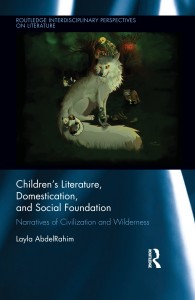
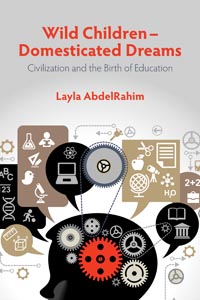
Click HERE (Routledge 2015) for an in-depth analysis of Narratives of Civilization and Wilderness.
Discussion of The Glass Castle by Jeannette Walls mp3
(correction: Of course, I meant “winter” and NOT”summer” when I was talking on the show about the family who melted snow to get water and warmth in Quebec. It must have been my own impatience to get to the sunny time of the year that caused the slip. This year, particularly, the winter has been too generous in terms of cold and snow)


The Walls family’s example is yet another illustration of how the contemporary capitalist world has brought the privatisation of space to perfection – a process that was begun in feudal times in Europe. In this book, we see the Walls family striving to live outside the city, which the parents called oppressive, yet refuses to take possession of land or to farm. However, the dictates of contemporary American society leave no possibility for survival in this world without serving the capitalist (often referred to as humanist) purpose. These norms or regulations and the system of privatisation dictate that some people are allowed to use and own the bodies, effort, time, and space of other humans, animals, and plants. Those who have been designated as resources are forced to pay the owners/landlords to live or eat or drink in this world.
The Walls family attempted to flee the City and its rules of capitalist exploitation, even if, often, they were forced to work in mines and pay “rent” to the individuals who owned the mining business and whom these exploited workers, impoverished by the unjust appraisal of their time and effort, made rich. In other words, huge percentages of their paychecks were extorted for the permission to live in horrendous living conditions in shacks, sometimes without utilities, such as the toilet or bathroom.
Jeannette Walls comes forth with great courage to unveil her past and invite the judgmental, merciless, and civilised voyeurs into her life. She accomplished the task without denigrating the people, who, as long as – and in the best way – they could, protected her from the humiliations of a rapist and murderous culture, we call civilisation and its concocted “scientific” evidence called “Darwinism” that, supposedly, justifies the complete annihilation of any thing that might threaten the possibility to hoard more resources and power for the future of the powerful and the wealthy. The “civilised” “scientists” call it competition, or the survival of the fittest, and by grounding it in nature, justify it as natural and inevitable. The Walls family refused to participate.
While in an autobiographical narrative we still face the problems of distortion, memory, and the changes in perspectives over time that make any biographical account problematic material for drawing anthropological conclusions, there remain even more problems with “professional” ethnography. Therefore, memoirs continue to have a strong appeal in the study of both the author, the “reality” and the experience that the author depicts, and most of all the society that reads and reacts to that material in specific ways.
In this radio discussion, we mostly discussed the issues of child welfare, a concept that is politically chiseled to serve political and economic needs and which is therefore highly problematic, sensitive and a relative cultural concept.
For example, child labour is forbidden in the civilised world. We find this norm surfacing at a time when it has become more profitable to squeeze two working parents to pay for the paraphernalia of childhood, such as toys, text-books, tuition, etc. – all of which serve capitalist interests. Anthropological research on childhood shows how in the wealthy “north” the phase of childhood has been extending well into one’s 30s, but in the countries on whose labour the north has built its wealth, it is still what it has been for David Copperfield and although we hear the “sensitive” “humanitarians” emphatically express “horror” for and “disapproval” of poverty and abuse, their stores are still filled with customers hunting for “deals” on products made by the abused people of all ages in China or Mexico, or….
The Walls family opted to avoid the civilised system of relations and division of resources. Statistics Canada offers many insights to support the position that, in fact, the poor workers are in a worse situation in terms of health, length of life, and general well-being than someone who is “poor” but refuses to give her time and effort to an employer. (link: http://www.phac-aspc.gc.ca/dca-dea/publications/healthy_dev_partb_1_e.html ). In other words, poverty, or the lack of access to resources, time, and space in the case of parents who do not work is, still, less neglectful than in the situation where both parents work on minimum wage and small children in impoverished neighbourhoods of the capitalist America walk home from daycare or school and play in the ghetto hungry and alone because their parents are cleaning up for someone else or caring for other people’s children and well being.
For me, to see how the Walls family stuck together in the desert, appeared to be a healthier alternative than the splintered childhoods in daycare, schools, after-school extensions or, even worse, the destitution of drug and prostitution driven neighbourhoods of the City.
The radio discussion of The Glass Castle
Time was short, and some important points remain untouched. Here, I elaborate some of them:
The definition of mental health is the ability of the mind to process information about “reality” that would allow the person to successfully integrate in that reality.
But what if the understanding and the view of “reality” that one group of people imposes on others does not correspond to the “real” reality out there nor is representative of the possibilities for other realities?
A good illustration here is the “scandal” with the pastor Jeremiah Wright during the American presendtial elections in 2008. Everybody knows that black people did not arrive on a Baltic cruise-ship on a vacation in North America. African people had their own cultures and communities, prior to the Europeans inscribing them in the category of “human resources”, from which they were kidnapped, half of them killed, and the survivors shipped off in shackles and blood in horrendous conditions across the sea to build the privileges of the white people in America who have, by that time, dealt swiftly with the dispossession of the Native peoples of their rights to the American land. Shackles, death, and pain are the heritage of the American Black people. Yet, when they express anger and dismay, they are being called racist!
Everybody knows that symbolic, cultural and material capital influences health, happiness, and longevity and that these aspects of wealth are accumulated through generations and transmitted accordingly. Everybody knows that the black people who did not arrive on cruise-ships on a vacation – they were captured as slaves and raped in all the meanings of the word – were brought to North America by force to serve the wealthy. They were stripped not only ofcapital, but, until recently they weren’t even considered as part of the human race. And “science” “proved” that “knowledge”.
Still, when black people express their indignation over the injustice that they are now told to enter a race that had begun centuries before they were invited to participate and which they had already lost (they did not come here on Baltic cruise-ships) and where they are still expected to work for the benefit of the wealthier others- they now get scorned and blamed for their inability to access the resources from which they have been and still are being denied by those who have legitimated greed. And so, these same impoverished and angry black and brown people are being called racist and are not allowed to point to historical facts that are common knowledge and which expose that the white people who have amassed during slavery, colonialism, etc. still enjoy the benefits inherited from their ancestors who collected their wealth through the abuse of blacks, aborigines, and wild life – that was the point of imperialism – and through the abuse of white people as well with feudalism and capitalism. What does such denial of reality tell us about the state of mental health of those who find it sane to accuse Jeremiah Wright of racism?
If we use the rhetoric of mental disability here, then the question is: Who is mentally ill? The one who fails to adapt to and to accept injustice or the one who imposes a falsehood as truth and announces the truth as illegal?
A semblance of a fair scenario, if such is possible in a capitalist setting, could have been for every single American to abandon their material and symbolic capital, redistribute it equally among everybody and then start afresh.
This is the concept underlying the reparations debate. Yet, when Barack Obama was asked on the CNN democratic debate what his plans were with regard to this problem of reparations, he relieved the rich people’s concern that they might be asked to give back what they owe (how could they even afford it? they must have asked): let’s give money to schools! Apparently, the black people need to be better educated and domesticated in this system of abuse.
The question of resources and their distribution is pertinent to the choices the Walls family made in their attempt to live outside of civilisation and to honour self sufficiency, dignity and independence, not only in their children, but in all life. The parents remained faithful to these ideals even after the children have grown up and left the “nest”. They chose to live on the streets, rummaging the garbage, refusing to accept their children’s willingness to share their consumerist and glamorous life-styles.
In the book, we see the parents in their youth filled with dreams and ideals of art, nature, and freedom. They try to get by on various jobs, but the jobs never solve their financial problems and only drag them deeper into poverty with no access to natural resources and with even less time and energy left to pursue their artistic and intellectual aspirations. At one point they had to pay the mining company that was exploiting the father for living in deplorable housing. I wonder why nobody sees this as madness: workers make the mining company owners wealthy; they sacrifice their health and dreams, get exploited and at the same time are expected to pay for the right to live in poverty while being condemned for that poverty. With time, we see the parents develop symptoms of depression: apathy, alcoholism, and ultimately despair, and when they do get an inheritance, it is too late. Health, energy, and dreams with time burn up in smoke. Depression is a healthy reaction to the insanity of the work ethic: it is depressing that people are denied access to the world so as to be forced to work for the interests of the employer. Depression is a form of rebellion and is healthy even in its pain.
This point led the discussion to the realm of rape:
While most definitions of rape specify that in order for an assault to be considered as rape, the force of someone’s will over another person has to have been applied in a sexual context. I would like to challenge this definition because I believe that by stopping at the sexual boundary, this definition legitimates the massive rape of people’s will, self-assertion, dreams and thus protects the major culprit; because the pleasure that the sexual assault provides is not the sexual contact but the fact that the rapist could force his will onto someone who did not will the act. This breaking of the will is, of course, the main point of schooling and civilisation.
In the book, Jeannette notices that dependence on Erma changes her parents from vivacious dreamers to succumbed failures.
Both, her father and mother act like classic victims of rape: they give up their will and do what Erma, the father’s mother, and “society” want of them. They draw within themselves. This hiding within oneself is reminiscent of the behaviour that is attributed to autism, claimed to be a self-centred behaviour and is typical in victims of rape or violent attacks. In fact, they also describe depression, which is a natural reaction to the experience of aggression and violated will. When a person reacts with empathy, that person feels and comes to know great sadness, pain or even despair in face of the endless violence towards the earth with its peoples and creatures, a violence in which we are all implicated and trapped since civilisation has taken possession of the globe. We find ourselves in the age of the globalisation of violence.
Professionals, such as doctors, psychotherapists or psychiatrists, diagnose negative reactions to civilised society as depression. Thus, a normal reaction of despair – say for the abused Chinese or Indian child-labourers whose products fill up European and American stores, or the bombed Iraqis, whose oil we participate in regulating and extracting, the dispossessed Indians in North America, for example – points to the mental health of the person whose whole being rebels against the injustice and the pain of the world. Despair is empathy that drives the person to cease her participation in these domesticated relations. Yet, depression has become a stigma that is being “cured” with drugs (both, legal and illegal). Medicalisation of this form of passive resistance strips people of their right to feel sad, to question their role in all this suffering, and to refuse it.
The Wall family did just that: they lived passionately and cherished life, even in despair.
Doctors, school teachers, activists for women’s rights in North America hammer constantly about the importance of thinking about one’s self, the virtues of wanting more for oneself, going after the dreams for oneself. This appears as a paradox when these same doctors, teachers, and women’s rights activists urge women to give up their time and energy to employers. If they get families, they are then urged to abandon their children in the hands of strangers in daycare and to neglect their children’s need for breastfeeding, protection by parents, and family togetherness. The symptoms of neglect, instead of being soothed by satisfying the children’s and family’s needs, are “cured” with plastics, medications, exploitation of nannies, house-helpers, etc. All of this is seen as good selfishness.
While the Walls family had a rough childhood, filled with pain, solitude, and shattered dreams, their strength and passion, togetherness and love fill the pages of their lives and give their children the dignity and the skills to succeed even in the culture that raped the land, killed most animal and plant species, destroyed the natives. They walked strong and passionate amidst the grey masses intolerant of difference, unforgiving of weakness, and judgmental of poverty, because they were feeling, they were dreaming of freedom, they were alive. If the aim of education is to forge strong, compassionate citizens of the world, capable of successfully finding their place in it, then we can judge the Walls family as having accomplished that mission. As for the pain, well, that seems to be the prerogative of a society that chose domestication we cherish now as civilisation, which so easily inflicts it on others, yet despises those who accept the suffering and call it happiness. But then again, what is sanity?
Layla AbdelRahim
We believe that information, knowledge, and art should be accessible for all. Behind every story, film, or essay, there are lives and people who gave their time, effort and resources to share with you ideas and quests. Texts and images are sold for money in the form of journals, books, DVDs, etc. and it is considered legitimate. We invested much of ourselves into this site and hope that it resonated with you. If you enjoyed reading our work, if it brought you something, inspired, enlightened or helped clarify things for you, please, show your appreciation by supporting it.